| NIE Home | Sponsors | E FAQs | Order Form | Contact Us |

Special Video Report
Courtesy: NBC-Learn and The W.K. Kellogg Foundation
 In celebration of Black History Month, we complied a selection of videos from NBC Learn's "Finishing the Dream" to use as an aid to teach the struggles and celebrate the triumphs of the Civil Rights movement over the span of 60 years. Additional material can also be found in the Special Report archive under Martin Luther King, Jr. "Finishing the Dream" is a project by NBC Learn, the educational arm of NBC News, and the W.K. Kellogg Foundation.
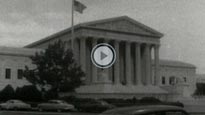
1954 Separate Is Not Equal
Brown v. Board of Education: 40 Years Later
Back in 1951, 13 black parents sued the Topeka, Kansas school board, charging that their children's segregated education was unconstitutional. The case became famous, known as Brown versus the Board of Education. It wasn't the first case challenging separate but equal laws, but like past cases, it was born out of frustration and dissatisfaction with racial inequities.
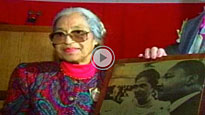
1955-56 Buses and Boycotts
The Significance of Rosa Parks' Simple Act
Rosa Parks, in refusing to give up her seat on a city bus to a white man, became the mother superior of the civil rights movement. Parks' arrest caused a protest that lasted 381 days, and led to the Supreme Court ruling that segregation in public transportation is unlawful. Despite the changes she brought about, Parks continued to believe that it will be a long time before feelings of white supremacy are completely erased from the United States.
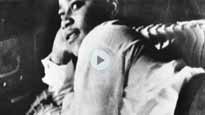
1955-56 Buses and Boycotts
The Story of Emmet Till
Everyone's heard of Rosa Parks and Martin Luther King Jr., and learned about their contributions in the civil rights movement. Few, however, are familiar with the name Emmett Till. Till's death, at the hands of two white men in the segregated south, opened American's eyes to that region's racial hatred. Though his killers were not brought to justice for their crimes, Till's legacy lives on in the form of new books and documentaries about him, created to keep his memory and legacy alive.
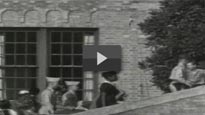
1957 Showdown
State v. Federal Government: Little Rock, Arkansas
A U.S. Supreme Court ruling that school segregation was unconstitutional did not end the practice. Many state and local officials continued to bar black students from all-white schools. In 1957, President Dwight D. Eisenhower sent federal troops to Arkansas to enforce a court order to integrate a high school.
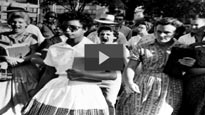
1957 Showdown
Little Rock Nine Discuss Integrating Central High School 45 Years Later
It took the protection of U.S. soldiers for nine black students to enter Little Rock Central High School and integrate its all-white classrooms. But, their challenges didn't end at the schoolhouse door. They had to endure continuing insults and threats from their classmates for the rest of their time in the school.
1960-62 Freedom Fighters
25th Anniversary of Greensboro Lunch Counter Sit-In
Four young black men sat in the 'Whites Only' section of their local diner and demanded service. The North Carolina diner had to close down for five months because of the incident. This peaceful action by four black students spread to fifty-four cities within days and contributed to the elimination of segregation from the United States.
1960-62 Freedom Fighers
In 1961, a small group of activists, both black and whites, decided to travel by bus through the Deep South, where segregation in bus facilities wasn't just the custom, it was the law, and where the simple act of boarding a bus was enough to put one's life on the line. The law stated that waiting areas at bus stations could not be segregated for those traveling between states, but many did not follow this law. The activists, known as the Freedom Riders, rode in protest of this injustice and continued to draw America's attention to the racial violence in the South.
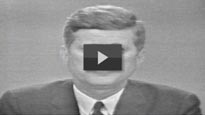
1962-63 Standoffs
JFK Civil Rights Address
In November 1963, President John F. Kennedy appealed to Americans to support the civil rights of black citizens to equality in education, public accommodations and voting. Days after his speech on the proposed Civil Rights Act, President Kennedy was assassinated in Dallas.
1963 Fury
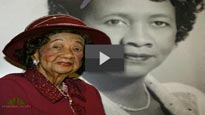
Remembering 'Godmother' of Civil Rights, Dorothy Height
Dorothy Height was one of the principle planners of the march on Washington on August 28th, 1963, which led to the Civil Rights Act. Height often worked behind the scenes as male civil rights leaders took the spotlight. But, she later became an adviser to presidents and received the nation's highest civilian honors.
1965 We Shall Overcome
Supreme Court Narrowly Allows 1965 Voting Rights Act to Stand
A U.S. Supreme Court ruling in 2009 permitted the continued enforcement of the 1965 Voting Rights Act, but some justices questioned whether the act is still necessary.
1966-1968 Challenges
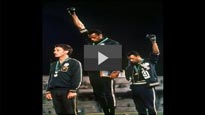
Tommie Smith
In 1968, athletes Tommie Smith and John Carlos placed the struggle for civil rights on a world stage when they raised their fists on the winners' podium at the Summer Olympics in Mexico City. They wanted to draw attention to the treatment of African Americans in the U.S. The men were suspended from the U.S. team and sent home.
March on Washington
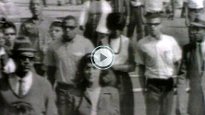
When civil rights leader A. Phillip Randolph proposed a civil rights march in Washington for the summer of 1963, no one knew how large the crowd would be. The number eventually rose above 200,000 people. The marchers, black and white together, crowded around the Lincoln Memorial where Martin Luther King Jr. gave his most famous speech.
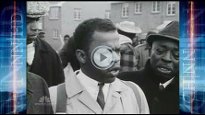
'Bloody Sunday'
Forty-five years after he and others were beaten during a voting rights march in Alabama, Rep. John Lewis returned to the Selma site of "Bloody Sunday," one of the defining events of the civil rights movement. The violence outraged the nation and President Lyndon Johnson, who ordered federal troops to guard Martin Luther King Jr. and protesters on their march from Selma to Montgomery.
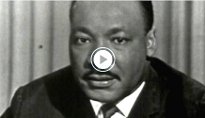
Meet The Press: Selma March
Martin Luther King Jr. spoke on Meet The Press one week after leading his historic march from Selma to Montgomery, Alabama. King said the demonstration was necessary not just to help push the Voting Rights Bill through, but to draw attention to police brutality and racially-motivated murder in Alabama.
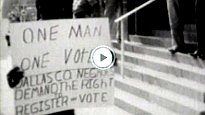
Right to Vote
Rep. John Lewis and other witnesses tell the story of the fight for African-American voting rights in the 1960s. They discuss the obstacles and violence faced by Martin Luther King Jr. and many civil rights workers in winning African-Americans the right to vote.
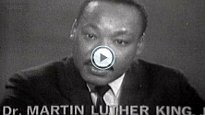
Meet The Press: Vietnam and Riots
On "Meet the Press," Martin Luther King Jr. talked about his opposition to the Vietnam War and said that despite the riots in American cities, he refused to allow himself "to fall into the dark chambers of pessimism."
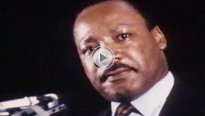
Last Days
An examination of the issues and struggles that civil rights leader Martin Luther King, Jr. focused on before his assassination and the impact his death had on the nation.
Distributed by NIEonline.com with permission
More NIE
Special Reports
►2014 Winter Olympics

►Fighting With Food

►Sustainability: Water
►Science of Golf

►Science of Innovation
►Writers Speak to Kids
►Summer Olympics

►Science behind the News

►Science of Hockey

►Changing Planet
►Cheeseburger Chemistry

►Chemistry Now

►Science of the Olympics

►Science of Football
►CyberBullying
About NBC Learn
NBC Learn is the educational arm of NBC News dedicated to providing resources for students, teachers, and lifelong learners. The online resources NBC Learn has created for the education community leverages nearly 80 years of historic news coverage, documentary materials, and current news broadcasts. Currently two unique offerings, iCue and NBC News Archives on Demand, give students and teachers access to thousands of video clips from the NBC News archives, including great historic moments--from the Great Depression to the Space Race to the latest political coverage. NBC Learn also offers primary source materials, lesson plans and classroom planning resources, and additional text and image resources from our content partners.
About W.K. Kellogg Foundation
The W.K. Kellogg Foundation, established in 1930, supports children, families and communities as they strengthen and create conditions that propel vulnerable children to achieve success as individuals and as contributors to the larger community and society. Grants are concentrated in the United States, southern Africa, Latin America and the Caribbean.
Additional Resources

Step onto any school campus and you'll feel its energy. Each school is turbocharged with the power of young minds, bodies, hearts and spirits.
Here on the Western Slope, young citizens are honing and testing their skills to take on a rapidly changing world. Largely thanks to technology, they are in the midst of the most profound seismic shift the world has ever seen.
Perhaps no time in our history has it been more important to know what our youth are thinking, feeling and expressing.
The Sentinel is proud to spotlight some of their endeavors. Read on to see how some thoroughly modern students are helping learners of all ages connect with notable figures of the past.
Online ordering
Now you can register online to start getting replica e-editions in your classroom.
Sponsors needed
Even small donations make a big difference in a child's education.
If you are interested in becoming a Partner In Education, please call 970-256-4299 or e-mail nie@GJSentinel.com