NewsTracker Answers for week of Feb. 09, 2026

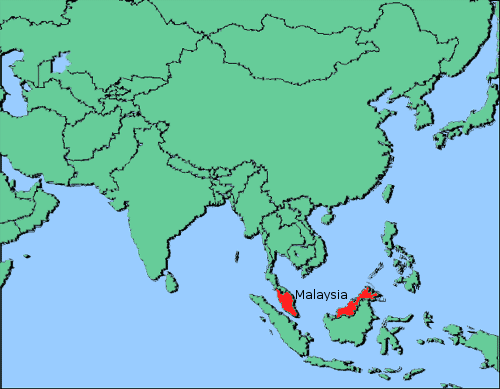
Q: Malaysia banned all importation of electronic waste last week, with the government promising the country would not be a “dumping ground” for the world’s waste. Where is Malaysia in Southeast Asia?

Circle the area on this map


Q: Malaysia and its neighbor, Indonesia, have started seizing and sending shipping containers full of illegal e-waste back to the nations where it originated, including the United States. Malaysia and Indonesia share a land border on the world’s third-largest island ...

A. Borneo

B. Java

C. New Guinea

D. Sumatra


A. Malaysia shares the island of Borneo with Indonesia and the tiny nation of Brunei. On the Malay Peninsula, it also has a land border with Thailand. Borneo, Java, New Guinea, and Sumatra are among the 17,000 islands of Indonesia.


Q: Malaysia’s ban comes amid a widening corruption probe of e-waste management, which has led to the arrest of two officials and the freezing of bank accounts. Malaysia ranked 57 on the 2024 Corruption Perceptions Index. Which nation ranks first on the list of 180 nations?

A. Canada

B. Denmark

C. Finland

D. United States


B, Denmark was perceived to be the world’s least corrupt country in surveys of business executives and experts compiled by Transparency International. Finland ranked second; Canada was 15th; and the United States ranked 28th. Transparency International plans to release its 2025 index this week.


Q: The volume of hazardous electronic waste has exploded and is increasing at an exponential rate. Which nation produces the most e-waste?

A. China

B. India

C. Japan

D. United States


A. With more than 1.4 billion people and a rapidly growing economy, China produces more than 12 million metric tons of e-waste every year. The United States, with a billion fewer people, produces 7 million metric tons. India and Japan are the third- and fourth-largest producers of e-waste.


Q: Electronic waste contains more metals than typical mining ore. However, it can be difficult to extract and recycle valuable metals such as copper, aluminum, iron, gold, silver, palladium, and others from waste. About how much e-waste ends up in the world’s landfills?

A. 20%

B. 40%

C. 60%

D. 80%


D. About 80% of our old phones, computers, game boxes, televisions, and appliances end up in landfills – many in poor nations – where the e-waste can leach poisons into the ground and water. A tsunami of e-waste is expected over the coming years as companies spend trillions of dollars building mammoth data centers for artificial intelligence and cryptocurrency.