NewsTracker Answers for week of June 29, 2026

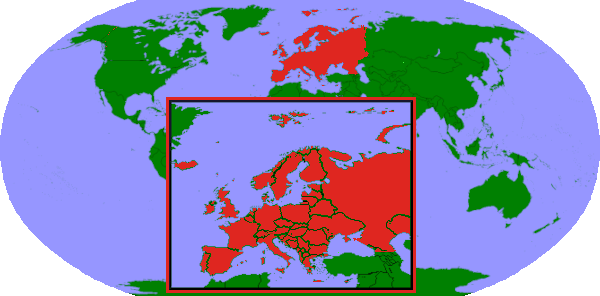
Q: Europe set new record high temperatures last week amid a scorching heat wave blamed for an estimated 1,300 deaths. Some schools, sporting events, music concerts, and tourist attractions were closed around the continent amid temperatures of more than 100 degrees Fahrenheit. Where is Europe?

Circle the area on this map


Q: Europe is generally farther north than much of the United States. Why has it warmed faster than any other continent over the last 30 years?

A. Cleaner air

B. Less snow

C. Melting ice

D. All of the above


D. Europe’s pollution controls reduced harmful particles in the air that also reflected solar radiation. Declining snowfall left more exposed soil to be heated in the sun. The warming atmosphere melted huge swaths of Arctic ice and the darker ocean is absorbing more solar heat.


Q: Which nation had to cut its electric power output because the heat wave warmed the water it needs to cool its many nuclear reactors?

A. Britain

B. France

C. Germany

D. Italy


B. France is more dependent on nuclear power than any other nation – reactors produce 67.3% of its electricity. Electricity is typically more expensive for Europeans than Americans, which is one reason that 20% of Europe’s homes have air conditioning compared with 90% in the United States.


Q: Many Europeans have enjoyed a milder climate than in North America and live in older homes that are harder to air-condition. They are also concerned about adding greenhouse gases and pumping hot air from homes into city streets. Which continent has the biggest percentage of its people living in urban areas?

A. Asia

B. Europe

C. North America

D. South America


A. European Union researchers estimate that 84.2% of Asians in 2020 lived in cities, suburbs, or towns. South America ranked second with 79.9% in urban areas, followed by North America at 75%, Europe at 72.6%, Africa at 71.5%, and Australia and the rest of Oceania at 70.9%


Q: Europe is 3.9 million square miles, bounded by the Arctic Ocean to the north, the North Atlantic to the west, the Mediterranean and Black seas to the south, and the Ural Mountains and Caspian Sea to the east. The name Europe is believed to come from ...

A. Asian mariners

B. Egyptian pharaohs

C. Greek mythology

D. Roman mapmakers


C. In ancient Greek mythology, Europa was a Phoenician princess abducted by the god Zeus and taken from what is now Lebanon in southwestern Asia to what is now Greece in southeastern Europe.