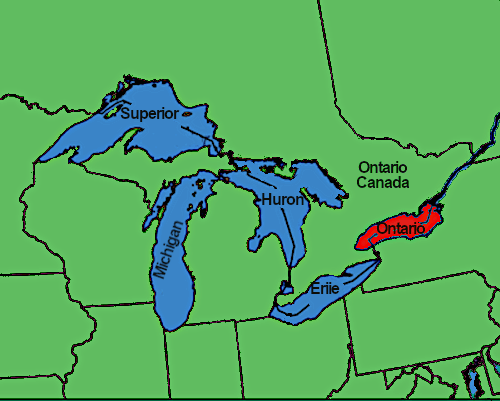
Circle the area on this map

D. French explorers named the largest and deepest Great Lake “le Lac Superieur,” meaning “upper lake.” Lakes Erie and Huron were named after Native American tribes. Lake Michigan comes from the Ojibwe word "Michigami," meaning “really large body of water.” The state of Michigan and the province of Ontario were both named after the lakes.
C. Lake Baikal in Russia’s Siberia region is the world’s deepest lake and contains 22-23% of the world’s fresh surface water. It is 5,387 feet deep compared with the 1,333-foot depth of Lake Superior. Lake Ontario covers the smallest area, and Lake Erie is the shallowest of the Great Lakes.
B. Half of the states have native language names – Alabama, Alaska, Arkansas, Connecticut, Hawaii, Illinois, Iowa, Kansas, Kentucky, Massachusetts, Michigan, Minnesota, Mississippi, Missouri, Nebraska, New Mexico, North Dakota, Ohio, Oklahoma, South Dakota, Tennessee, Texas, Utah, Wisconsin, and Wyoming.
A. The mapmaker used the name to honor Amerigo Vespucci, an Italian who made at least two voyages across the Atlantic between 1499 and 1505. He described the coast of what is now Brazil in colorful letters that were published and widely read in Europe. Some other explorers and historians have doubted the truth and source of Vespucci’s letters.