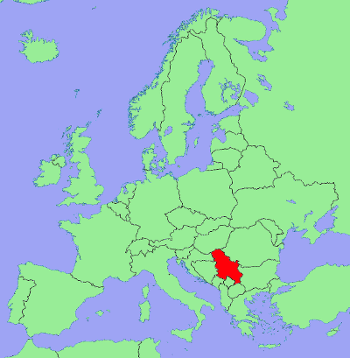
Circle the area on this map

B. Serbia’s Students’ List movement won a historic parliamentary election, defeating former President Aleksandar Vucic’s Serbian Progressive Party after 14 years of political dominance. Vucic stepped down as president in September to run for prime minister, as he’d reached the term limit in his previous role. The Students’ List’s victory marked an unprecedented achievement for a grassroots youth movement challenging an entrenched political establishment. victory also reflects a broader wave of youth-led political movements gaining influence across Europe.
C. Serbia’s student movement is demanding the resignations of senior police, intelligence, and judicial officials accused of prioritizing loyalty to the former ruling party over their legal responsibilities. Authorities have faced allegations of excessive force against protesters, illegal surveillance, political intimidation, and interference in corruption investigations. The students also want public officials to preserve evidence of potential wrongdoing and have promised to review government contracts and spending. Movement leaders insist their goal is not political revenge but restoring professionalism, accountability, and the rule of law.
Serbia is a southeastern European country that has been pursuing membership in the European Union, a political and economic organization whose members cooperate on trade, security, and shared democratic principles. However, Serbia’s efforts have stalled amid concerns about weakening democratic institutions, political interference in the judiciary, and the country’s close ties to Russia under former President Aleksandar Vucic. The European Union has expressed support for Serbia’s incoming student-led government and offered assistance in strengthening democracy and the rule of law. The political transition could create new opportunities for Serbia to advance its European integration efforts.
A. Serbia’s student movement began gaining momentum after a November 2024 train station canopy collapse killed 16 people, raising concerns about government corruption and negligence. Students organized widespread demonstrations demanding accountability, transparency, and stronger democratic institutions. Over time, their protests evolved into a broader political movement challenging President Aleksandar Vucic’s government. Their victory in the October 2026 parliamentary election ended 14 years of dominance by the Serbian Progressive Party and demonstrated how grassroots activism can develop into a powerful force for democratic change.